Saturday, September 28, 2013

Double whammy! Cook the Books meets Tasting Jerusalem

I love serendipity, and this month it struck with the convergence of two communal cooking groups. Cook the Books 2013 with Meg of Grow & Resist and Briggs of Ohbriggsy! focuses on a different cookbook each month, and Tasting Jerusalem with Beth (@omgyummy) and Serene (@fringefood) selects a different ingredient each month from a single book. So September brings Jerusalem and pomegranate molasses to the spotlight.

Plenty is a favorite cookbook (though I'm nowhere near vegetarian), so I bought Jerusalem when it came out. While I admit I don't turn to it as often, I have been inspired by the flavors and recipes over the past few months. Choice dishes I've made have included Roasted Cauliflower Salad (p 62), Baharat spiced grilled eggplant over Mejadra (p 120), Baharat eggs over Mejadra, preserved lemons (p 203), and Lamb Meatballs with Currants, Yogurt & Herbs (p 199).

On the menu this month:

Cardamom rice pudding with pistachios & rose water (p 270) - As previously confessed in my Cook the Books Gran Cocina Latina post, I adore rice pudding. And rose flavored things. Especially the combination of cardamom and rose (see my french toast and meringue posts). As usual I made some of my recipe reading mistakes (long grain rice instead of short grain) and some substitutions (half & half instead of heavy cream, and a little extra milk with some sugar instead of condensed milk), so my version was no doubt a little less rich than Ottolenghi and Tamimi's...but it still looked and tasted gorgeous! The overnight liquid soaking part felt a little fussy to me; I wonder if there might be a way to impart the flavor of the spices without that step. Also, my sister gave me one of her rugosa rose bushes, which produces amazing blooms and rose petal jelly! The petals went into this dish too.


Shakshuka (p 66) - Me and Tunisian cuisine both have a passionate love affair with eggs. The recipe states it's a seasonal summer variation, and using all fresh farmers market produce and eggs really emphasized this point. The fresh flavors of the peppers and tomatoes shone through, and the harissa brings some spicy depth without overwhelming. Over the moon with this satisfying dish despite my less than perfect presentation. I halved the recipe and used only whole eggs (not whole eggs + yolks), so found it was a little tight in my pan and swirling the whites was just a bad idea for me. There will be a next time, so I'm sure this is a practice makes perfect kind of thing.


Wheat berries & Swiss chard with pomegranate molasses (p 100) - This dish was a strange one for me. First of all, though I should have had a sense of it from the cooking time (all together over 80 minutes), but I wasn't expecting it to be so stew-like. Served up with poached salmon on the first night, it was really tasty. Though the BF liked it less than me. True, I may have been a little heavy-handed with the pomegranate molasses, so it was pretty tangy, but to my palate a nice combination of textures and flavors. A couple days later we had some leftovers, and it had become much less pleasant tasting; bitter and strong. I did skip serving it with the suggested greek yogurt both times, so maybe that would have helped mellow out the strong flavors. I would maybe make this again, and fiddle with the ingredients and proportions in order to make it more savory, with just a hint of sweet, and less dominant sharpness.


One of the really fun things about immersing yourself in a single cookbook each month—or for longer!—is to investigate and savor different ingredients. I love going out to the various ethnic grocers in our neighborhood (rarely do I need to go further) and buying things I usually only look at or wonder about. And I frequently discover new ways to use a familiar ingredient too. At home in my own kitchen, I feel like I journey the world through food. And the exploration is made that much more interesting with good company. I can't wait to see what everyone else, from both cooking communities, cooked up this month!


And for the record (the second time), I WILL make the Chocolate Krantz Cake one of these days...

Note: My trusty old Canon PowerShot SD650 is on its last legs, and I recently crossed over to the dark side and now have an iPhone. I'm trying out all iPhone photos for the blog. and though I haven't spent any time exploring more than basic functionality, so far...I'm not convinced. Tips, thoughts and camera recommendations are all welcome.

Monday, September 2, 2013

Concord Grape Jam from Put 'em Up! Fruit for FSC Book Club

Put 'em Up! was one of the first preserving books I found on the local library shelves, and it quickly became a trusted favorite. So when author/canner extraordinaire Sherri Brooks Vinton came out with her second cookbook, Put 'em Up! Fruit, I immediately got myself a copy.

Then I spotted a fellow food swap group, From Scratch Club (from the Capital Region of New York), hosting just my kind of book club: The No-Stress Virtual Cook-Along Book Club! I've been keeping an eye on the activity—primarily via the Goodreads group—but this week {Meeting 5: Grapes, Grapefruit & Quince} was the first time I've been able to make something, and post about it. My Meyer Lemon Gastrique from {Meeting 4: Blueberries, Apricots & Lemons} made it to the last food swap, though I never posted on it.

Last year I counted myself super lucky to score some concord grape concentrate a friend had made from their backyard harvest. The resulting concord grape jelly became the go-to jam in my larder for PBJ's.

So, I didn't hesitate to purchase when I spotted some local concord grapes at a nearby market recently. Since the fruit in my fridge lined right up with the book club chapter, I set my mind on the Concord Grape Jam on p. 141.

This jam took me about 4 days to finish. Seriously. Though prepping the fruit and cooking it took no time at all, I knew I wanted to get it into the canner, and kept running out of time. So it ended up macerating in the fridge a solid 3 days, before I canned it up. I confess, one PBJ was eaten in the interim.


Concord grapes measure up

Squeezing the grape pulp out is fun

Grape innards

Jam hitting its boil

If you have never tasted homemade concord grape jam or jelly, you are missing out. The Smucker's of your childhood just doesn't measure up. Doesn't compare! Doesn't hold a candle to the real stuff! Truly.

Grape jam/jelly you make yourself shines. It has deep purple grape-y essence, but with built-in flavor layers and explosions. It's like a meteor shower of sweetness. It is the M-80 of the jam world. It's a knockout.

Bonus points: my grape jam jars have grapes on them!

One of the great features in Put 'em Up! Fruit is the 'Use it up!' meal recipe accompanying each preserving recipe. No jars full of dregs and last bits of whatever here! So, I am looking forward to putting this jam to savory use in Butter-Basted Steak with Grape Reduction down the line.

If any makes it that far, that is.

Warning: you may be tempted to eat this by the spoonful

Monday, August 26, 2013

Cook the Books 2013 - Ice cream sandwiches from Sweet Cream and Sugar Cones

Generally I don't go out of my way for ice cream. Maybe it goes back to the fact my first job was at Baskin-Robbins. Every time you took a break you were supposed to have a scoop of ice cream so you knew all the flavors. This doesn't sound like a terrible fate, I know, but I only worked there about 2 weeks, and even by then I was already sick of eating ice cream. Daiquiri Ice was my favorite, and to this day I like ices or simple flavors best. Or mint chip. Anyhow, even though I won't wait in that crazy line at Bi-Rite Creamery, and I don't really fancy all the artisan ice cream places in general (Mitchell's and La Copa Loca remain my faves), I did get excited by this month's cookbook.


It starts right off with basic ingredients and techniques for making your own ice cream, sorbets, granitas and ice pops. And all the fixings too. Plus step-by-step instructions for assembling ice cream cakes, pies or sandwiches.

Then the book tackles flavor categories one by one, starting off with vanilla. The crème fraîche ice cream is the standout for me—maybe in the entire book—but it's not the one I ultimately made. But now I've gone and gotten ahead of my scene setting approach...

The first recipe that I knew for sure I would make was Lemon Gingersnaps. I will eat anything gingerbread-like, and the addition of lemon oil and zest seemed extra interesting.


These cookies turned out to be the head-turners in the crowd. Once I paid heed to the recipe and spread them far enough apart on the sheets, they spread their cookie wings and took flight. Perfect, round, sparkly cookie delight.


Good thing I took them to the food swap, because this recipe does make a monster amount of cookies.


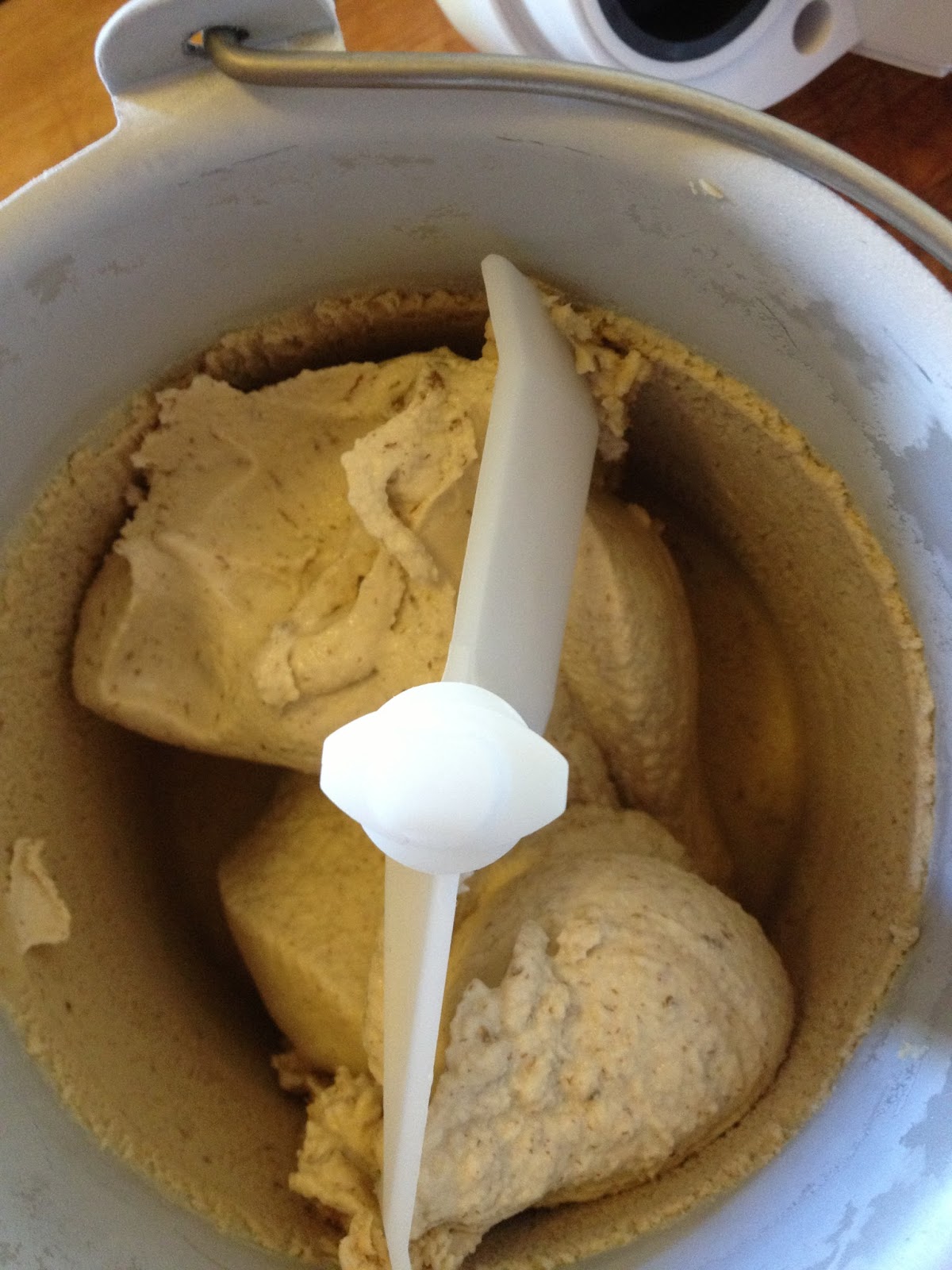
Then, after borrowing a behemoth ice cream maker from next door neighbors (meet the Lello 4070 Gelato Junior), I set my sights on making some filling for my stellar cookies. Two ripe bananas had been calling out for some rum and heavy cream, so I got easily roped into the carmelized banana ice cream recipe...


But, have I confessed my terrible recipe reading skills yet? Alas, it's true and they struck hard here. Despite reading the explicit chilling directions: "refrigerate the base for at least 2 hours or overnight", I put mine in the freezer! Freezing it before making ice cream? That's nonsense, but I still did it. So, the next morning I found myself waiting for my base to defrost so that I could mix in the flavorings and freeze it into ice cream. Ridiculousness.


Within just a few hours, I was back in action. And after just 25 short minutes in the humming gelato factory, I stood looking into the eye of some homemade ice cream. My first batch ever (though perhaps that's already abundantly clear from my confessed faux pas above?).


My ice cream was creamy, nicely textured, and though a bit too sweet for my own tastes, pretty darn delicious. I kept licking it off anything I encountered with ice cream on it, so that's gotta be a good indicator.


Then came the moment I had been waiting for. The making of the ice cream sandwich. If you've read the book, you'll immediate notice my ice cream sandwich looks nothing like the perfection they picture. I admit it, I did not use a measuring cup to shape my filling, nor was there an offset spatula involved in smoothing the sides. But there was some messy ice cream sandwich eating, and that my friends was the end game.


So, after all this I can absolutely recommend Sweet Cream and Sugar Cones for making some ice cream. Next time I'm going to experiment (syrup swirls and herbal kicks for sure), but whatever recipe you choose I can promise that with not a lot of effort, you'll be kicking back and enjoying the pure, sweet taste of summer!


Wednesday, July 31, 2013

Tasting Jerusalem! Roasted Cauliflower and Hazelnut Salad

It's dubious as to whether I can really take on another communal cooking project, but my love of Yottam Ottolenghi and the fun approach of the Tasting Jerusalem group (who were just featured in the New York Times' Recipe Lab!) has had me salivating from the sidelines for the past few months, coaxing me to join in the fun. I had the best of intentions for May's baking round (this phenomenal looking Chocolate Krantz Cake will still happen) and preserved lemons round too (a fridge full of Meyers didn't even tip the balance), but this month it's salads on the menu, and it all came together.

Cauliflower is one of my favorite vegetables. It like to think it hearkens back to warm memories of my Oma (German grandmother) making her cheesy, delicious, melt-in-your-mouth Gebakene Kohl (baked cauliflower), but whatever the genesis I'm always keeping an eye out for new recipes and ways of preparing it.


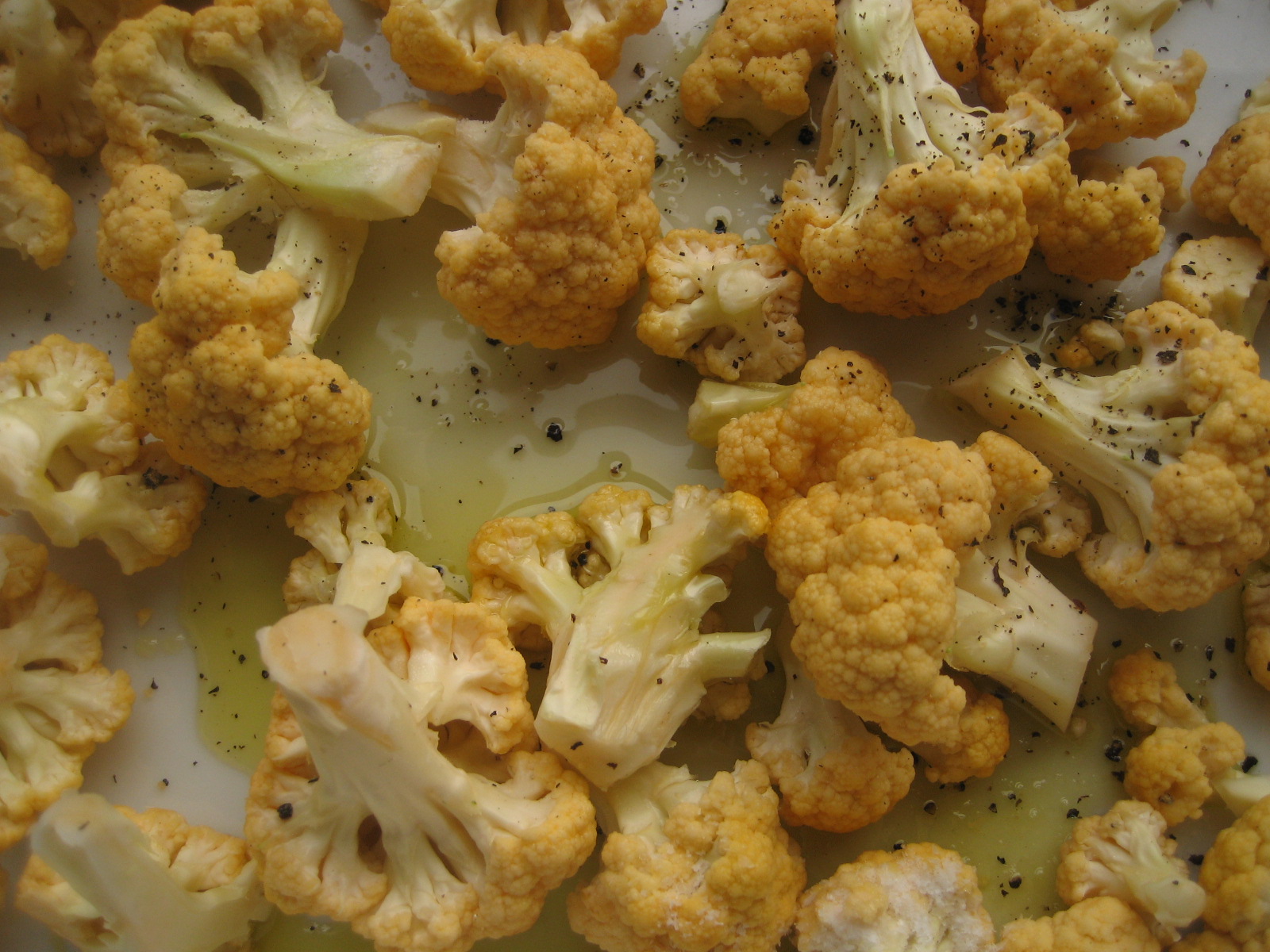
Without any conscious forethought to the recipes in Jerusalem, I picked up a small but perfect cauliflower at the farmers market and tucked it into the fridge. A couple days later I leafed through the cookbook pages again and saw I had bookmarked the Roasted Cauliflower and Hazelnut Salad. Perfection! With the exception of sherry vinegar (I subbed red wine vinegar), I even had all the ingredients on hand.

Even though the ingredients seem autumnal, this is a great summer recipe. The roasting is easy and fast, allowing you to prep the rest of ingredients at the same time, which means you end up with a healthy, beautiful salad on the table with very little active cooking time.

Below is my ode in images, with a link to the recipe at the end.

Roasted Cauliflower and Hazelnut Salad


I was particularly wowed by this salad, because it calls upon ingredients I would never have thought to put together but which effortlessly complement each other. With allspice and cinnamon, spices I typically don't use in salads, the layers of flavor were at once light and elegant. It was flavorfully rich, but easy to eat. Once again, Jerusalem hits one out of the park.

Find the recipe here.

And speaking of spices, Tasting Jerusalem's focus for August will be Bahārāt, a spice blend I look forward to experimenting with!

Monday, July 29, 2013

Cook the Books 2013 - Gran Cocina Latina brings rice pudding, hibiscus cocktails and smoky soup

July has been mostly freezing in San Francisco. So I chose two warming recipes and something for cocktails from this month's Cook the Books selection, Gran Cocina Latina: The Food of Latin America by Marisel E. Presilla.

This book is seriously impressive, an 800-page tome packed with authentic recipes from throughout Latin America.

And paging through it was a particular joy for me, because it brought alive so many memories and flavors of past experiences in various countries. While living in Mexico, I perfected one of my favorite dishes, Huachinango a la Veracruza (p 626), and I ate the Taquitos de Carnitas "Al Paraíso" in Pátzcuaro (p 394) many times! While traveling in Peru I savored Causa Limeña and Papas a la Huancaína, and even visited the International Potato Center (CIP) detailed on page 201. I watched hearts of palm being harvested in the jungles of Brazil, and then ate them in salads similar to the Hearts of Palm and Mango Salad (551). And mofongo (p 188) was the first typical Puerto Rican dish I had on my first visit. I could go on...

But as much as this book evoked vivid memories for me, I didn't get much time in the kitchen to cook from it. And while some of the recipes I read through closely seemed overly complicated to me, with just three recipes actually used, I feel unable to give it a reliable review overall. In my opinion this seems like a good book for a cook looking to expand their Latin American repertoire, rather than someone looking for a cookbook to start out with.

Here's where it took me:


Hibiscus Syrup (a staple in Mexico, and still one of my favorite agua frescas)

Doesn't get much easier than making a syrup, and this one is very tasty. The end result is not super sweet and has nice layers of flavor from the orange peel and spices, so it is great for cocktails. We made hibiscus lime margaritas, and because of its gorgeous color, floated it in prosecco. Thumbs up for both! With the remaining syrup I plan to try to recreate a tamarind, hibiscus, rose water cooler that I love from a restaurant in Eugene. Perfect summertime sip, if we ever get that around here!


Smoky Pureed Pumpkin & Cacao Soup (this one just captured my imagination, and taste buds)


This produced a rather strange but not entirely displeasing soup. It was way too thin, but I used kabocha squash instead of pumpkin—which the book did list as an alternative—but I wonder if it just didn't thicken up enough with the squash I used. I also used plain yogurt instead of Mexican crema, and didn't use manchego cheese or other listed garnishes. Maybe these things would have all made this soup amazing. Anyhow, it was a very concentrated flavor. If you don't make the accompanying cacao-chile balls (I didn't), I suggest serving with quesadillas to dip in for bites.


Peruvian Rice Pudding with Brown Sugar and Coconut (excelente!)


Rice pudding is one of my favorite things, but weirdly, I never make it myself. There were two delicious sounding recipes in this book, but I went with the less creamy one since I'm still trying to clear out lingering head cold congestion. This rice pudding is unusual in the fact that it uses no cream or milk at all, just rice cooked in water, and a syrup made with brown sugar, coconut, raisins, pecans and spices. It's easy to make and very very satisfying. I brought this to a cold afternoon potluck, where it was a hit, and would readily make it again.


OK, now I'm ready for some sunshine! It can't come soon enough, since our cookbook for August is Sweet Cream and Sugar Cones: 90 Recipes for Making Your Own Ice Cream and Frozen Treats from Bi-Rite Creamery!

Sunday, July 21, 2013

Guest post from the Midwest: Mary's perfect roast chicken + chicken stock

From the moment Mary and I met we started talking about food. We were new work colleagues, so there was probably some discussion of books, and music (just one the excellent lists she heads up) and other workplace type things in there too...but really, somehow we recognized a kindred soul on the food front immediately. I believe I sent her back to Wisconsin with a jar of jam I had recently made after that first meeting, and thus begun the exchange of delicious cooking ideas and meals and more. One of my favorite cocktail secret weapons has been some artisan blackstrap bitters she gifted me, and I've kept the California fruit preserves coming her way. This post has been a long time in coming (my fault entirely, as she delivered it back in May!), but with the look of things outside today—cue fog, cold wind...SF summer regulars—roast chicken is still a perfectly timed dish to be making. When isn't it really? 

Reading this I find myself to be quite the opposite kind of cook from Mary. I tend to be interested in cooking many things at once, and am constantly trying new recipes versus spending the time really perfecting a dish. Of course I do have my own staples I can turn out with regular consistency, but I admire her dedication to getting something just right. Read on for Mary's step-by-step guide to the perfect roast chicken, followed by chicken stock.

I don’t consider myself a creative cook. The dishes I enjoy making are simple, and I make them again and again. My grandmother used to say that the simplest things are the hardest to do really well. I often think of her when I get into a groove with a dish I am interested in, and start to make over and over again, to try and get it just the way I like it.

This winter, that dish was roast chicken. Not a fancy, complicated thing to make. But there is boring roast chicken, and there is satisfying and delicious roast chicken, and there is sublime roast chicken. I wanted to get to the really satisfying and delicious version, reliably, every time. (And maybe one day one of them would be sublime, but hey, that would be a bonus.) Roast chicken is an excellent thing to obsess about in the winter in Milwaukee: roasting keeps our place warm and uses the only kind of produce that is fresh and local in the winter. Also roast chicken produces a crucial dividend: stock.

Roast Chicken
The ingredients
For me and my spouse, we get a four pound organic roaster. This recipe can scale up for your massive Thanksgiving monster-bird, but a four-pounder is just right for one meal of hot from the oven roast meat and vegetables, plus cold chicken leftovers, and the all-important stock. If we have guests, I roast two chickens…..or get a turkey. 

Rutabaga and root vegetable love
I roast my chicken with root vegetables. In the winter, in the upper Midwest, if you want to eat local, you need to get to know your root veggies: onions, potatoes, parsnips, rutabagas, turnips, celery root. (I adore sweet potatoes, but my spouse does not. Carrots and beets, especially the winter ones that have been around the block, work well, but I find them a little too sweet. But any and all of these would work well if you fancy them.) I will never be a vegetarian, but roast chicken taught me to appreciate rutabaga.

I love stuffing, and I am old school about putting stuffing inside the bird. But a normal chicken doesn’t have room for a satisfying amount of stuffing. I buy two lemons per chicken, and a big bunch of either rosemary or tarragon to stuff my chicken with.  

Finally: butter, at room temperature, olive oil, salt, and pepper.

The method
I am of the start-it-hot school of roasting: preheat the oven to 450°, and after the first 20 minutes of roasting, lower the temp to 400°. My oven is slow; for a hotter oven, you would use different temperatures. Experiment and figure out what works with your oven. I swear by twenty minutes per pound; I’ve tried other guidelines for how long to roast a bird and found them wanting. 

The bird, ready for the oven
I like using a rack in my roasting pan because I can but veggies right under the bird, but you can also just lay the bird in your roasting pan right on top of your veggies. The point of roasting veggies under the bird is to get them all covered with the delicious chicken juices. I rub just a little bit of butter on the bottom of the roasting pan, and put the chopped veggies into the pan as is: no oil, no water, no wine, just some salt and pepper. Veggies can get soggy and greasy, so I herd them to get the desired results. Potatoes and celery root absorb a lot, and putting them around the edges keeps them from getting too greasy. On the other hand, a lot of chicken juice really makes a parsnip or rutabaga worth eating, so I put those pups are right under the bird. You are going to have this operation going a long time in the oven, so don’t cut the veggies too small: larger chunks get nicely roasty without turning to mush. The most delicious roast veggies of all are onions (leeks and shallots are my favorites, but whole pearl onions are lovely too) and garlic, and those can stand up to anything. My standards for “enough garlic” are pretty far over on the bell curve: I use an entire head per chicken (two if they are small), scattering the cloves among the other veggies, and two or three inside the bird.

Rinse the bird inside and out. Cut one of the lemons and juice it, reserving the juice. Stuff the halves of the lemon inside the bird, along with as much of the herb of choice as you can fit and a few cloves of garlic.

I put the bird breast down for its trip to the oven: in my experience, this does make the breast meat more tender and juicy. (Thanks, gravity.)  This method sacrifices the classic breast-meat-super-crispy-skin combo. But I am not a chicken-skin fetish person; I’d rather have the white meat reliably juicy. 

Once the bird is stuffed full of herbs, garlic, and lemon rind, poised on the rack above the veggies, grab a chunk of room temperature butter and rub it all over the bird’s skin. Then, pour the juice of the lemon over the skin, and sprinkle with salt and pepper. 

If you roast breast side down, you don’t need to baste obsessively, but every 15 minutes does help keep the bird uniformly moist. More important, you should turn the bird every 15 minutes, so it gets evenly browned. I use olive oil to start, and once bird starts giving up enough juice that you can scoop it out of the corners of the pan, use that for your basting. 

Once twenty-minutes-per-pound is up, ‘resting’ the bird for 15 minutes before carving does help everything settle, and if you are of the school of making pan gravy, this is when you go to town. I am not of that school: I take my extra lemon, juice it, pour it over everything in the pan. I’ve never been able to make a gravy can hold a candle to the blend of chicken juice, chicken fat/butter/olive oil, and lemon juice that this method delivers.

Beautiful, ain't it?

Stock
The ingredients
The rule for stock is: nothing succeeds like excess. The whole point of stock is to have something rich, delicious, and full of vitamins to use in your cooking. But if you skimp, you end up with mildly flavored stuff that is hardly an improvement over water.

The carcass of your roasted bird is where it all starts. Cold leftover chicken is a big favorite in our household, so we have had to reach détente over how much meat to remove from the bird: you want some meat going into the pot. The bones are just as important: get them all in there, they add a lot of body and richness. Skin too, and if you got a neck or giblets with your bird, they go in as well.

The workhorses of making good stock
Pot veggies: onion, shallots, leeks, garlic, carrot, celery. Two big onions, a whole head of garlic, an entire bunch of celery, and three carrots is my absolute minimum. I like to include other veggies too, usually things that are mellow and sweet: asparagus ends, mild greens (baby spinach, lettuce), peas or corn. What goes into your stock will assert itself, so don’t kid yourself that stuff that comes in your farm box that you don’t like can be tossed in without consequences. (No cauliflower in my stock, thank you very much.) If you plan to do something where the broth’s profile can be strong, go head and add bitter greens (radish tops, turnip greens, mustard greens). Mushrooms create an amazing flavor profile, they aren’t going to hide themselves. I tend to avoid starchy root veggies, since they thicken the stock. But if you are making something creamy (chowder, bisque) that may be exactly what you want, so go to town with some potatoes or other root veggies.

I always include some herbs in my stock; a big bunch of flat leaf parsley, and some rosemary or tarragon (whichever was used to roast the bird). I also throw in five or six whole peppercorns, and if the stock is headed for an Asian recipe, a hunk of ginger. 

The method
Rough chop everything up and put it all into your big stockpot, cover with cold water, and bring to a boil.  Lower the heat until you’ve got a vigorous simmer, and let that keep happening for at least three hours. My most successful stocks have been the ones that cooked the longest: long simmering draws all the yumminess out of the meat and bones especially.

Once everything has been cooked into submission, strain it into a new pot with a fine mesh strainer.  For super-clear stock, strain it twice, using cheesecloth the second time. Then set it into the fridge to cool thoroughly. Once it is completely cooled it is easy to skim off as much fat as you want to.  Now, my grandmother would never dream of skimming off all that lovely fat, or at the very least she’d save it if she did. But to each their own. 

Before you use the stock, it needs a little finishing. I don’t put salt into my stock until this point, but stock does need salt. Heat it up, give it a taste: cold unsalted stock tastes different from warmed unsalted stock. A little something acidic will brighten the flavor, the juice of a lemon, or some dry white wine.